
Specialty · Vehicle & Mobile Builds
Spray foam insulation for van & camper conversions in Manitoba
Direct answer
Closed-cell spray foam bonds directly to a stripped van, cargo trailer or camper shell, sealing every rib, seam and screw hole in one pass. It air-seals and insulates at the same time, and because it's continuously adhered rather than cut-and-fit, it doesn't rattle loose or sag the way batt or rigid foam board can on a surface that's actually moving down the highway. Van and camper builds aren't covered by any building code, so there's no R-value minimum to hit here. The standard is comfort and durability, not a code number.
Scope: wall, ceiling and floor cavities on stripped van, camper and trailer shells
01 The application
A steel shell insulated the same way a house wall is, minus the code
A van, cargo trailer or camper shell is a thin, ribbed steel box. The ribs, cross-members and compound curves that make it strong also make it slow to insulate with cut-to-fit batt or rigid board. Every gap left around a rib is a path for outside temperature and condensation to reach the interior finish. On a wall that doesn't move, that's a nuisance. On a wall that's vibrating down the highway at -25°C, it's where the build fails first.
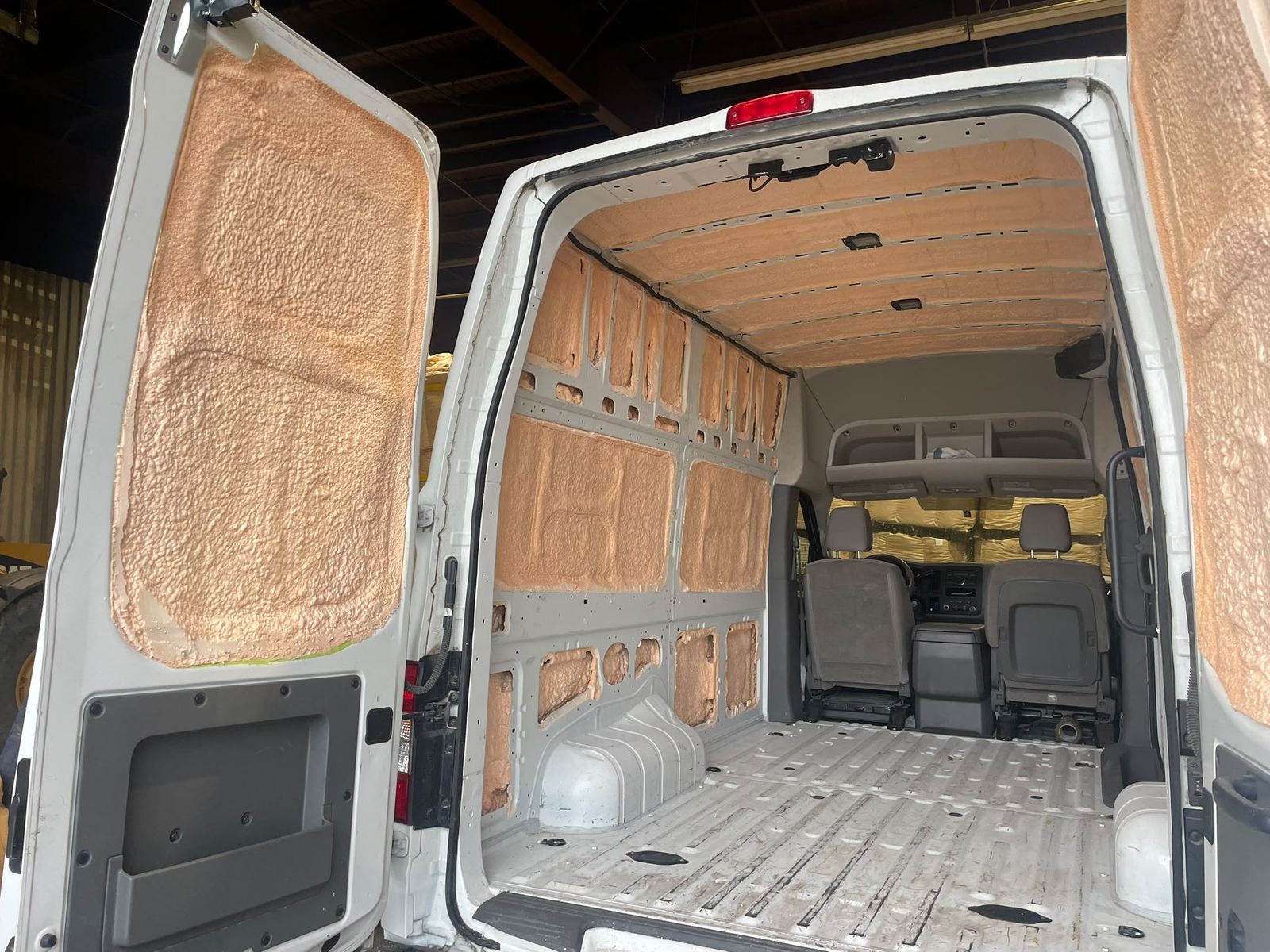
Spray foam expands into the ribs and behind wiring runs in one pass, bonding to bare or properly primed steel and curing into a continuous air barrier, vapour barrier and thermal layer, all at once. It's the same closed-cell chemistry we use for condensation control on cold steel in quonsets and shops; a vehicle shell is just a smaller, thinner version of the same problem.
What we install, and what we don't claim
We use our standard 2lb closed-cell foam, the same Grizzly Gold HFO product used across residential and commercial jobs on this site and CCMC 14133-L listed. At the 1 to 1.5 inch depths a van's wall ribs typically allow, that works out to roughly R-5.5 to R-8: a straight-line estimate from the product's listed 2-inch, R-11.1 rating, not a separately tested vehicle figure.
Van and camper interiors aren't part of the National Building Code or the Efficiency Manitoba rebate program the way houses are, so neither applies to this work.
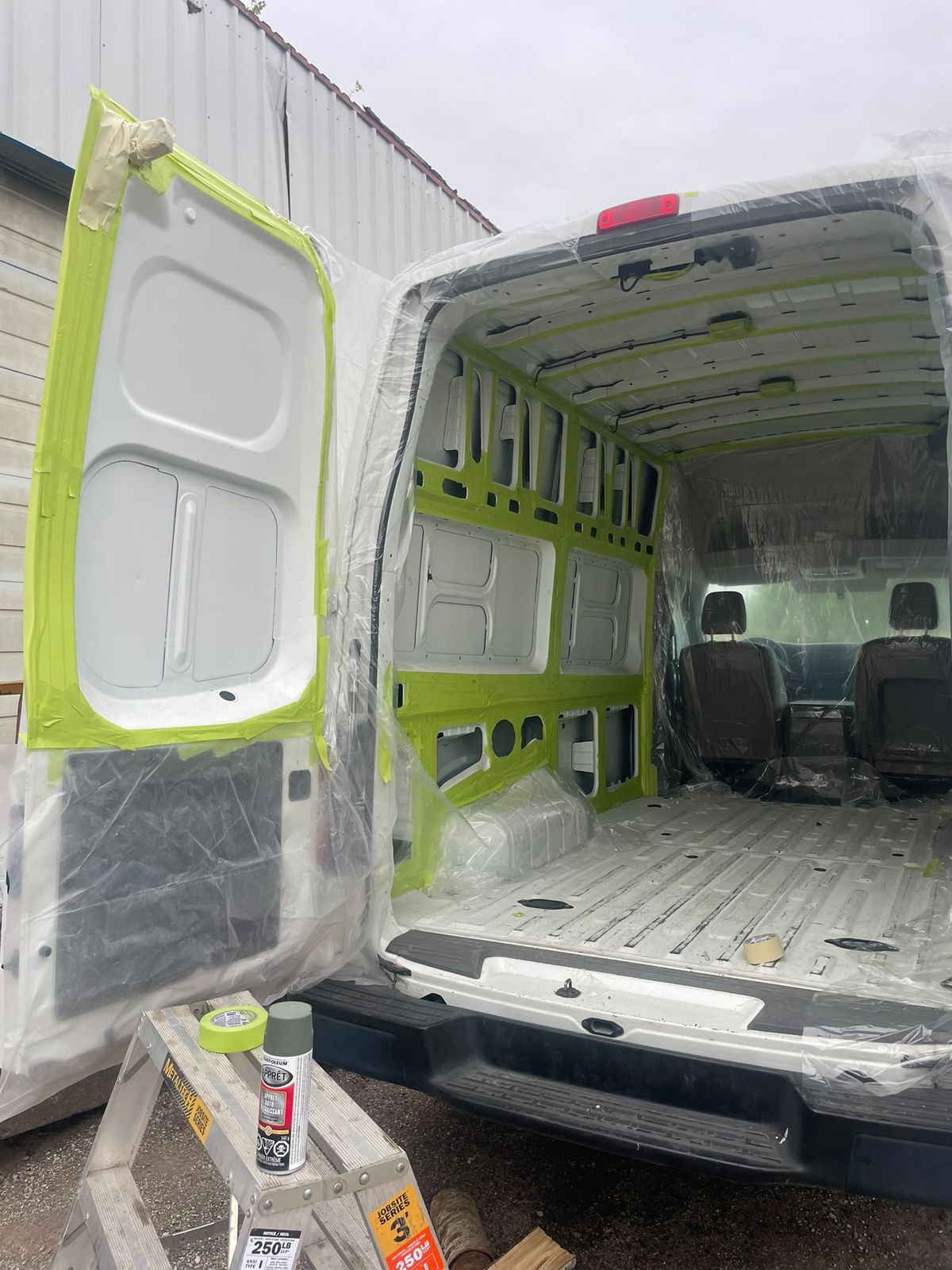
02 Process
How a conversion job actually runs
Comes before we arrive
Strip to bare metal or a sound factory liner. Foam needs to bond to the panel itself, not to old adhesive, sound-deadening mat, or anything loose.
Deal with rust first. We won't spray foam over active corrosion. Foam over rust just hides the problem instead of stopping it, so grind, treat and prime any corroded spots before we're on site.
Decide your interior finish plan. How much wall depth you're giving up to furring strips and panelling determines how much foam depth we can actually use.
Where Ecologic does the work
Mask what shouldn't take overspray. Glass, window tracks, wiring runs and anything you've already installed.
Apply closed-cell foam to walls, ceiling and, if you want it, wheel wells and floor, sealing every rib and seam in one pass.
Trim flush where your finish plan calls for a flat surface, and leave the rest at its natural texture where it's staying hidden behind panelling.
We ventilate and let the foam finish curing before the van goes back into service, so plan on the vehicle being out of use, doors and vents open, for at least 24 hours after we spray.
03 Beyond buildings
The same foam, wherever the substrate is unusual
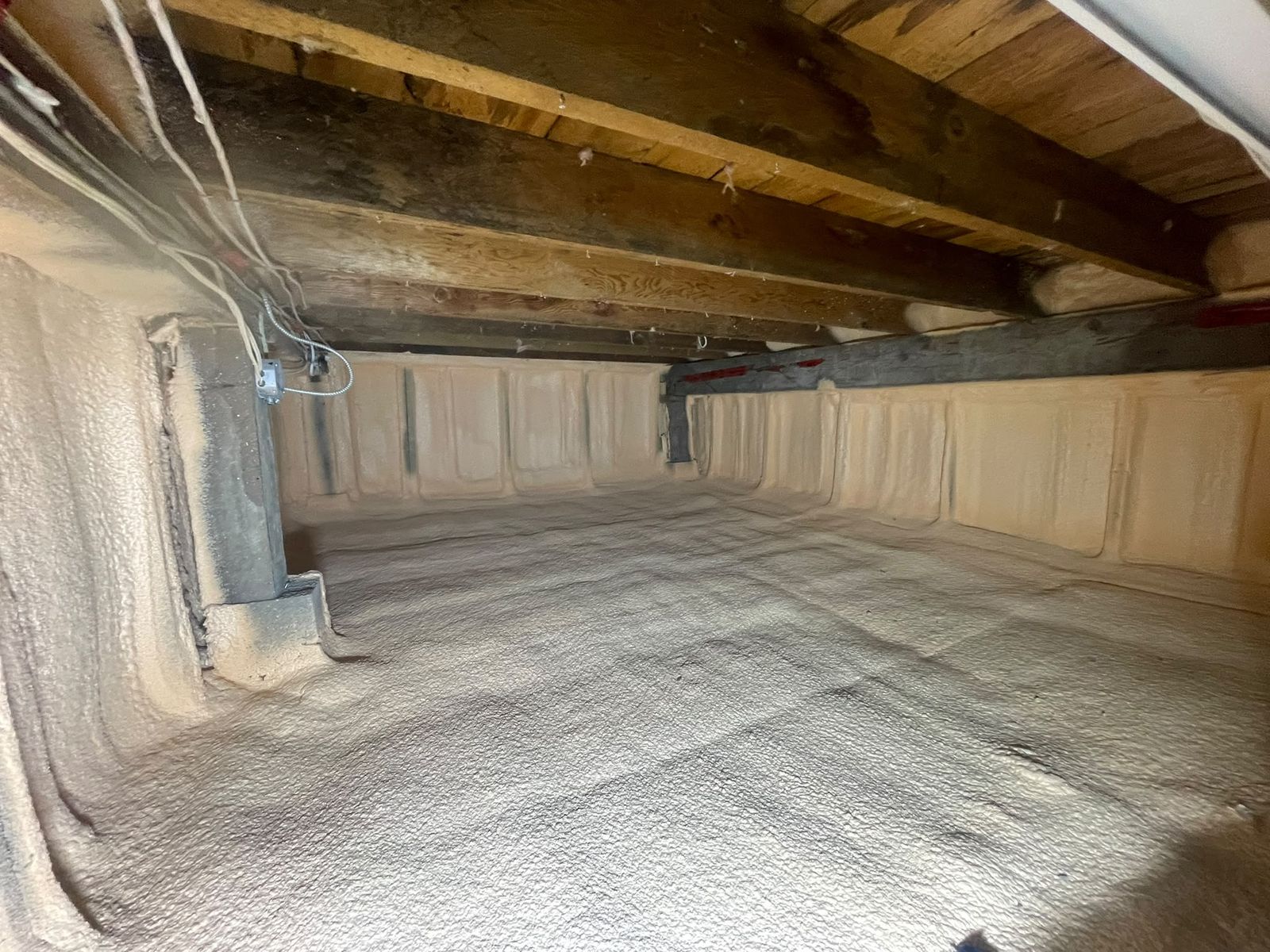
Van interiors are one entry on a longer list. The chemistry doesn't change from job to job: expanding closed-cell foam bonds to almost any clean, dry substrate, seals every seam it touches, and stops condensation forming on whatever's cold on the other side of it. Only the surface changes.
We've applied it to ice shacks and bunkies, quonsets, shops and barns, dock and marine flotation billets, shipping container conversions, and engineered void-fill and hazard-sealing closures. If your project doesn't look like a standard house wall, ask. There's a decent chance we've already sprayed something like it.
04 Questions
Van & camper insulation, answered
Will spray foam actually hold up to a van driving down the highway?
Yes. Once cured, closed-cell foam is chemically bonded to the metal, not just fitted against it, so it doesn't shift, sag or rattle loose the way a cut panel of rigid foam or batt insulation can after years of vibration and temperature cycling.
Won't foam trap moisture against the steel and cause rust?
Applied over clean, dry, rust-free steel, closed-cell foam does the opposite: it seals out the humid interior air that condenses against a cold panel in the first place, which is the actual driver of interior rust in an insulated van. It's not a substitute for dealing with existing corrosion; we treat that first, before any foam goes on.
How much does the foam weigh, and will it eat into payload?
It's a 2lb-density foam applied in a thin layer, lighter than most rigid foam-board-and-furring-strip approaches at the same R-value, and far lighter than any fibrous insulation that's absorbed moisture. For an exact weight added to your build, we'll work from your actual interior square footage.
Does this meet a building code or qualify for a rebate?
No. Van, camper and trailer conversions fall outside the National Building Code and the Efficiency Manitoba rebate programs that apply to houses. There's no R-value minimum to hit here; we're building to comfort and durability, not a code line item.
Do you handle the whole conversion, or just the insulation?
Just the insulation. We work from your stripped shell, on your timeline in the build, and hand it back ready for framing and finish work. The framing, electrical, plumbing and cabinetry are your build or your builder's.
Got a van, camper or trailer to insulate?
Tell us the shell you're working with and how far along the build is.